The courage to be yourself
A slight play with words on the book title, The Courage to Be Disliked is perhaps this reflection, The Courage to Be Yourself. Essentially, just some contemplations on authenticity.
***
The emotions came the next day, after a Barry's HIIT class.
Initially, I thought, ‘Surely Barry's hasn't made me emotional, like this?’
But no. These were different emotions.
The day before, my team and I had won a national award.
But it wasn't just that we had won. It was how we had won. And, perhaps more importantly, what it represented to me.
I was overwhelmed by how good it felt to arrive at this point in my career, without feeling like I had had to become someone else along the way.
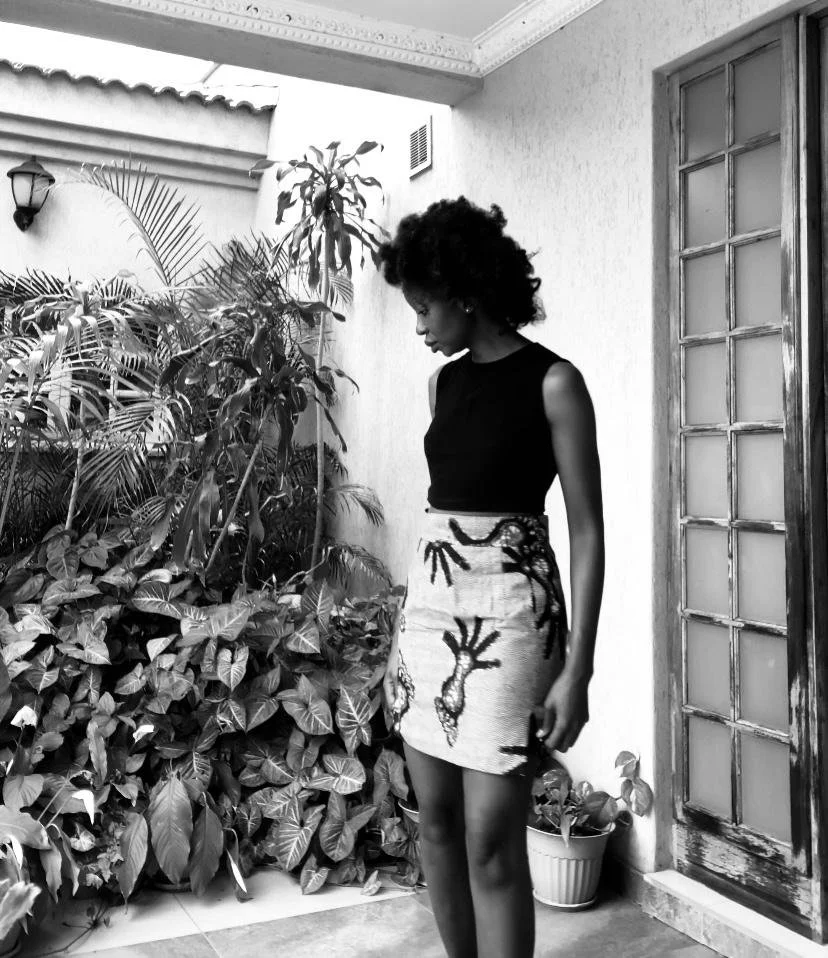
At the awards, I wore my natural hair in twists, an African necklace and a colourful gown that made me feel beautiful. I didn't feel the need to wear heels. I didn't wear a full face of makeup.
I was just...me. And it felt entirely comfortable.
It got me thinking about authenticity.
What does it actually mean to be authentic? Perhaps, more importantly, who can afford to be authentic? Authenticity isn’t readily available to everyone. Unfortunately, some face greater consequences for being themselves than others.
I was recently at a leadership talk where authenticity became a surprisingly heated topic. One perspective was that we sometimes have to understand the norms and expectations of the environments we want to succeed in, and learn how to navigate them. The other, was that we should be allowed to bring our authentic selves into those spaces.
But what does that actually translate to?
I don't think authenticity is simply about doing whatever feels good to us. Sometimes there is a tension between belonging and individuality. Between adapting to a room and changing the room. Between finding your place within a system and deciding which parts of that system you want to challenge. And this becomes particularly interesting as we move up.
Imagine you arrive at the top wearing pink hair. You have spent years navigating a profession or organisation where pink hair isn't necessarily what people expect leadership to look like. Then you get to the top.
Do you cut the pink hair?
Or do you keep it?
And either answer could be authentic.
The question is whether you're making that choice because you want to, or because you've decided that this is what you need to look like to belong.
There is something more courageous happening when you choose to remain yourself in a space that wasn't necessarily designed with someone like you in mind.
When we do that, we don't just make a personal statement, we make the room a little bigger for the person coming behind us.
That is where authenticity becomes collective rather than simply individual self-expression. Every time someone who has historically had to conform chooses not to shrink themselves to fit the room, they subtly challenge the definition of who belongs there.
Maybe that's one part of the social contract of leadership.
Not simply to get to the top, but to make it easier for others to arrive without having to leave parts of themselves at the door.
Of course, authenticity isn't always easy.
There are moments when adaptation is useful. Sometimes we need a little social lubricant to navigate different environments. There is a distinction, however, between adapting your behaviour and abandoning yourself. Sometimes we know when we've crossed that line. Often, we only realise much later.
The exhaustion of constantly performing a version of yourself can be enormous.
Occasionally, the mask is heavier to carry than the crown.
The award ceremony was a small but powerful reminder that I don't have to choose between success and my own authenticity.
I can enter rooms that weren't necessarily built with me in mind and still bring my whole self into them, as an Acholi girl from Uganda, who grew up in Botswana…who isn't pretending to be somebody else.
And perhaps most importantly, I can get there without deciding that the person who started the journey needs to stay behind.
A little reflection
Ask yourself:
Where in my work am I editing myself to fit the room?
Where am I adapting because it is useful, and where am I adjusting because I'm afraid of being seen as myself?
If I became more senior, what would I want the person coming behind me to feel they could be?
What would it look like to bring 10% more of my real self into the room this week?
You don't have to arrive at the top completely unchanged. We all grow. We learn. We adapt.
But perhaps the quiet bold challenge is this:
As you climb, don't leave the most important parts of yourself behind.
And if you find yourself in a room that wasn't designed with you in mind, perhaps ask:
Do I need to change myself to belong here, or is there an opportunity for me to help change what belonging looks like?
Because maybe authenticity isn't simply about having the courage to be yourself.
Maybe it's having the courage to let being yourself change the room.
And perhaps, one day, someone else will walk into that room, see you there, and realise:
I can be myself, here, too.
This week I have been…
Listening: Sana Lwam' by Dr Duda
If you found this reflection useful, forward it to one person who would appreciate it.
You might also like…